Skip to content

Irrigation · Edmonton, Alberta

Sprinkler Systems and Irrigation in Edmonton

Irrigation installation, servicing, spring start-ups and fall blowouts — designed around a short season, hot dry stretches and a winter that will split anything left holding water.

A sprinkler system Edmonton lawns can rely on has two jobs: keep turf and beds alive through the dry weeks of a prairie summer, and survive being frozen solid for five months. The second one is where most systems fail, and it is entirely preventable.

We handle irrigation installation from the design stage — zoning, head layout, pipe sizing, valve and controller placement, and drip lines for beds and planters — as well as repairs, adjustments, seasonal start-ups and fall winterisation on systems we did not install.

Because we also install the landscaping, irrigation on a new yard goes in before the sod does. That is the cheap moment to do it: no cutting open finished turf, no trenching through established beds, and the zones can be laid out to match the planting rather than fought around it afterwards.

Sprinkler System Design and Installation

Design is what separates a system that waters evenly from one that leaves brown arcs across the lawn all August. Heads are laid out so their spray patterns overlap properly, zones are grouped by what they are watering and how much sun they get — south-facing turf does not want the same programme as a shaded bed — and pipe and valves are sized so every head on a zone actually gets the pressure it needs.

On a typical residential install we trench the lines, set the heads at finished grade so a mower passes over them, run wire to the valves, mount and programme the controller, and connect to the water supply with the backflow protection that any connection to potable water requires.

Commercial sites get the same treatment at a different scale: larger zones, boulevard and island coverage, controllers a property manager can actually operate, and layouts planned around parking, foot traffic and where snow will be pushed in winter.

  • Zone design and head layout for even coverage
  • Trenching, pipe, valves, wiring and controller set-up
  • Drip irrigation for beds, planters and shrub areas
  • Backflow protection on the supply connection
Spring Start-Up and In-Season Service

Start-up happens once the risk of a hard frost has passed, generally in May. It is not just turning the water back on: the system has to be charged slowly so a sudden surge does not blow a fitting, then every zone is run, every head checked and adjusted, and the controller reprogrammed for the season ahead.

Winter moves things. Frost heave lifts and tilts heads over the cold months, so a head that was aimed perfectly in October is often watering the driveway by May. Nozzles clog, seals fail, a lateral splits where water was left in it. Catching these at start-up costs far less than watering a fence for two months without noticing.

Through the season we handle repairs, head replacements, coverage adjustments after landscaping changes, and controller reprogramming — including dialling a fresh-sod schedule back down to a normal one once new turf has rooted.

Sprinkler Blowout and Winterisation

A sprinkler blowout Edmonton systems need every single autumn is the most important service call of the year. Water left in a lateral, a valve or a backflow device freezes, expands and splits it, and you will not find out until spring when you charge the system and it starts leaking underground.

Timing matters. The blowout has to happen before the first hard frost, and in the Edmonton area that means booking for late September into October rather than waiting for the first snow. Book early — every irrigation contractor in the region is doing blowouts in the same few weeks, and the last available dates are the risky ones.

The job itself: the water supply is shut off and isolated, then compressed air is run through each zone in turn until the heads run dry, at a pressure that clears the lines without damaging them. The backflow device is drained and protected, and the controller is shut down or set to its off position for the winter.

  • Booked before the first hard frost, typically late September to October
  • Supply isolated and drained
  • Every zone cleared with compressed air, one at a time
  • Backflow device drained, controller shut down for winter

Watering a Lawn in a Prairie Summer

The Edmonton growing season is short and the summer can be genuinely dry, with hot stretches that will stress turf badly if it is watered lightly and often. Deep, less frequent watering pushes roots down; shallow daily sprinkling keeps them at the surface where they burn out first in a hot week.

The exception is new sod, which needs frequent watering until it has knitted into the soil beneath, after which the schedule should be tapered. If we have laid the sod, we set the controller up for that transition when we install it.

Early morning is the right time to water — less is lost to evaporation and wind than at midday, and the grass is not left wet overnight. A well-programmed controller does this without you having to think about it, and it also stops the system running through a rainy week.

How It Works

From first call to finished job

  1. Step 01

    Site visit and water check

    We measure the property, check the available water pressure and flow, and look at sun, shade, slope and what is planted where.

  2. Step 02

    Design and free quote

    You get a zone layout and a written quote covering heads, valves, controller, trenching and the supply connection.

  3. Step 03

    Install

    Lines are trenched, heads set to finished grade, valves and wiring run, and the controller mounted and programmed. On new landscapes this happens before the sod goes down.

  4. Step 04

    Test and tune

    Every zone is run and every head adjusted so the coverage overlaps properly, with no dry arcs and nothing watering the sidewalk. We show you how to run the controller.

  5. Step 05

    Seasonal service

    We come back for spring start-up and for the fall blowout before the first hard frost, and handle any repairs in between.

Irrigation work in Edmonton

Photos from our own sites — no stock images.

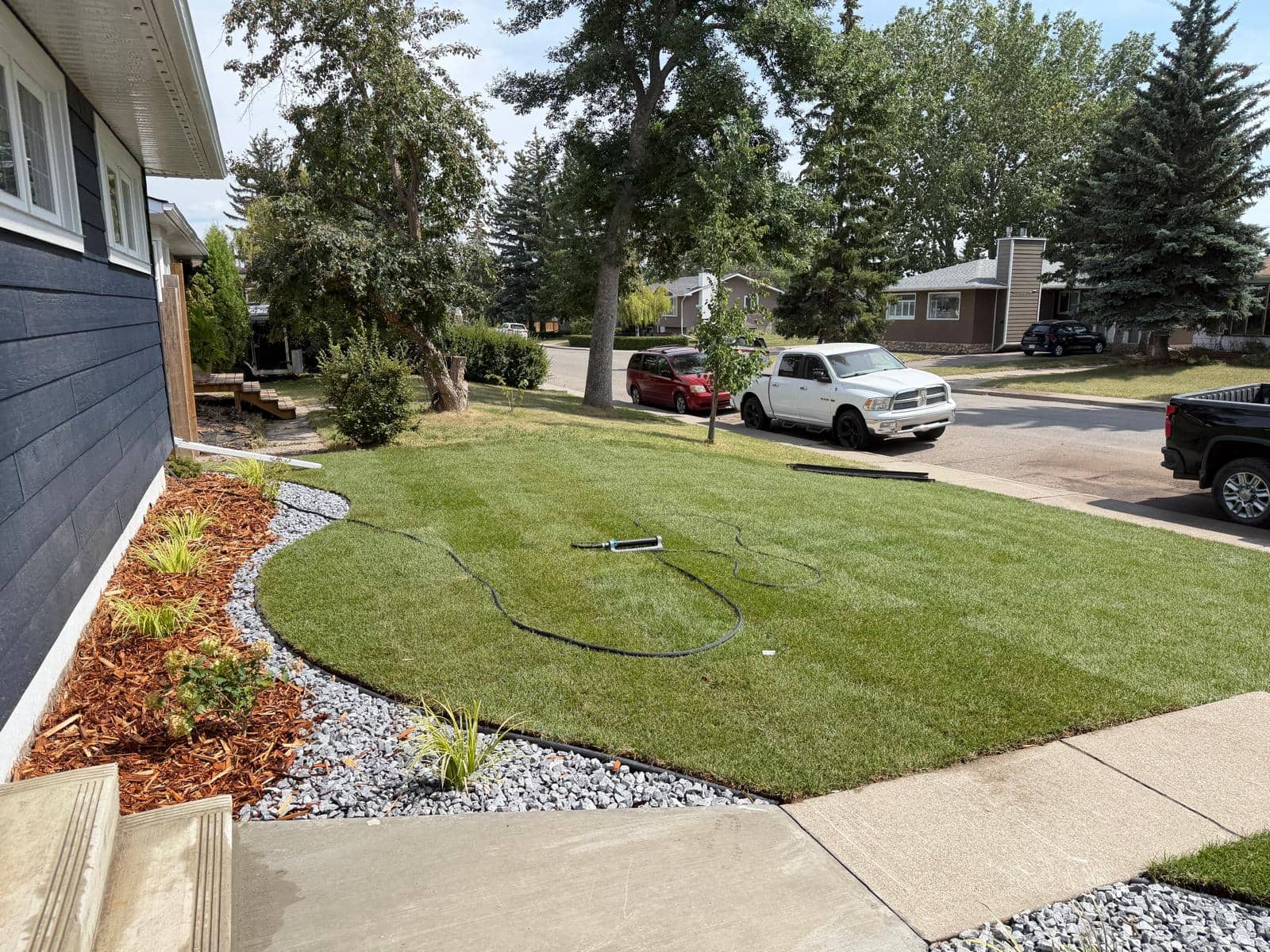
  • Irrigation line and sprinkler head laid out across a newly sodded front lawn

    Lawn irrigation installation

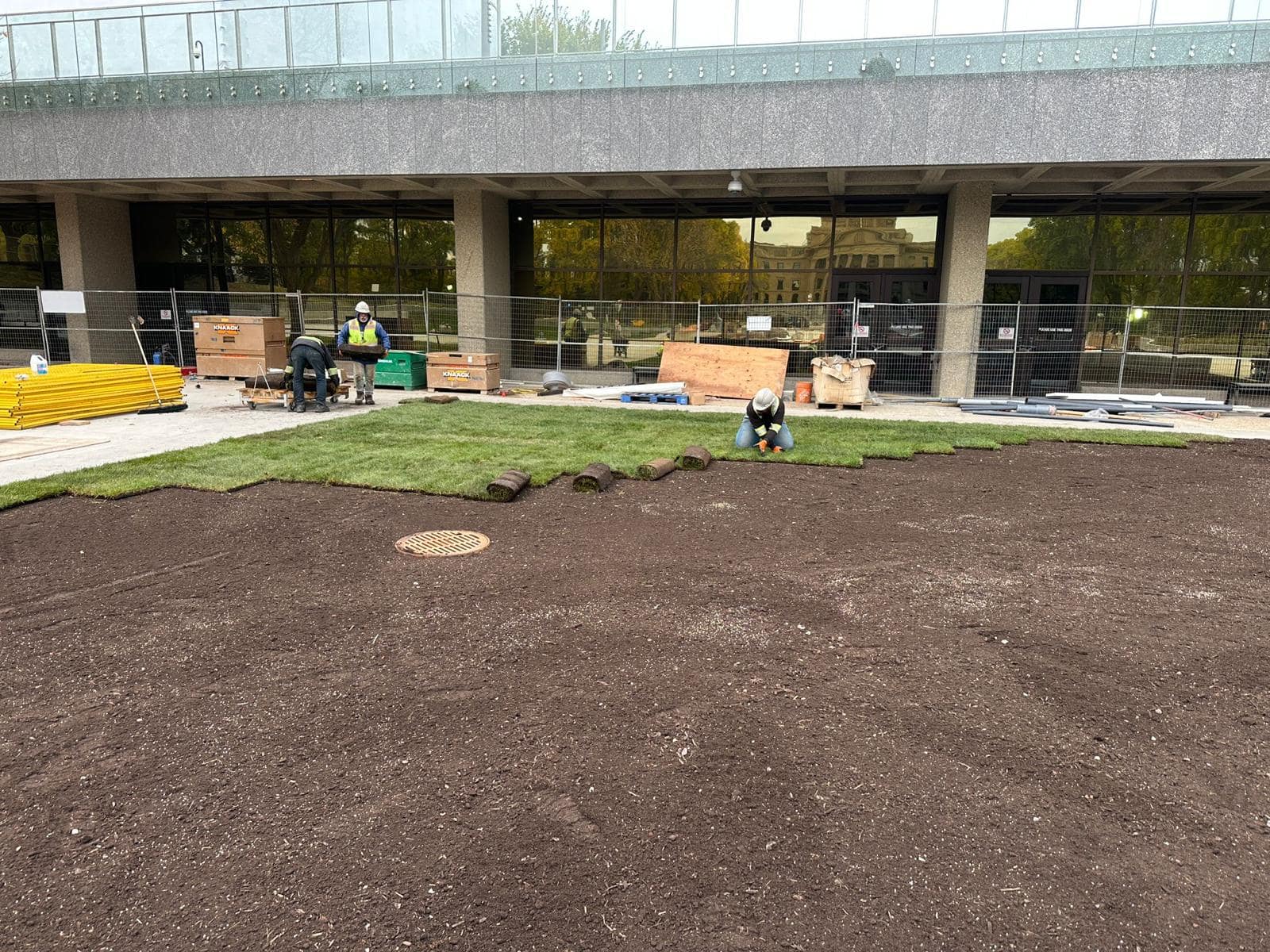
  • Murat Construction crew rolling out fresh sod in front of a commercial building in Edmonton

    Commercial sod installation

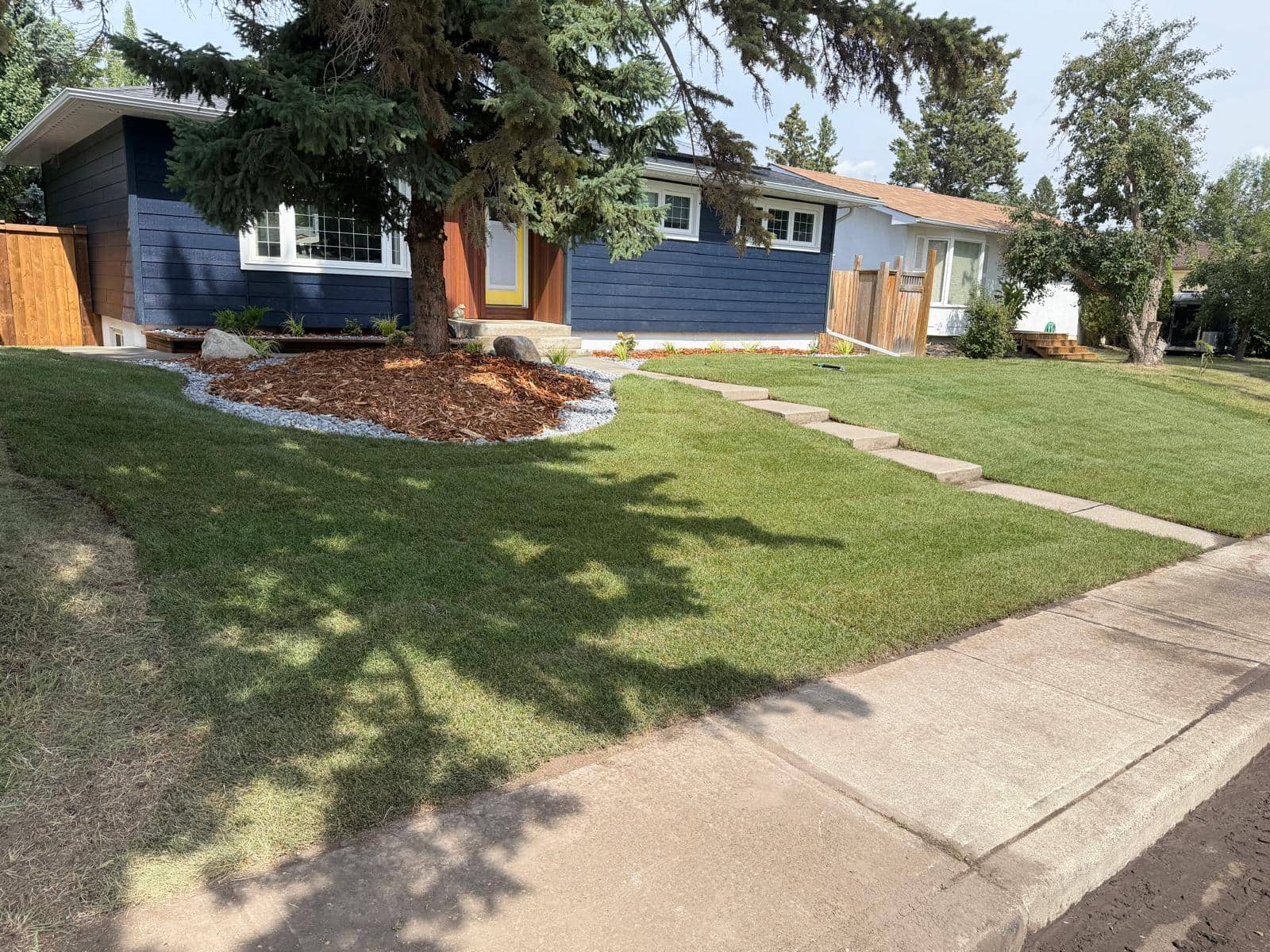
  • Completed front yard with fresh sod, mulch bed, rock edging and a stepping-stone path

    Front yard transformation

See the full project gallery

Irrigation across Edmonton and the surrounding areas

Our crews travel out of Edmonton to the communities around it. Pick yours to see what we do there.

Irrigation questions we get asked

When should I book a sprinkler blowout in Edmonton?

Before the first hard frost, which in this area usually means late September into October. Do not wait for snow. Water left in the lines freezes and splits pipes, valves and the backflow device, and the damage stays hidden until you charge the system in spring. Booking early in the season also gets you a better date, because every contractor is doing blowouts in the same few weeks.

When can the system be turned back on in the spring?

Once the risk of a hard frost has passed, generally in May. The system should be charged slowly rather than turned on at full pressure, and every zone checked, because winter frost heave routinely lifts and tilts heads out of alignment over the cold months.

Can irrigation be added to an existing lawn?

Yes. Retrofitting into established turf means trenching through it, and the lines do show for a few weeks until the grass recovers, but it is routine work. If you are already replacing the lawn or landscaping, installing at the same time is considerably less disruptive and less expensive.

Do you service systems installed by someone else?

We do. Repairs, head replacements, coverage adjustments, controller problems, spring start-ups and fall blowouts are all available whether or not we installed the system.

How much watering does a lawn here actually need?

Less often and deeper than most people assume. Deep watering encourages roots to grow down, which is what gets turf through a hot dry stretch; frequent light sprinkling keeps the roots shallow. Early morning is the best time, and a properly programmed controller handles the seasonal adjustment for you.

Need irrigation in Edmonton?

Tell us what the job involves and we will come back with a free, no-obligation quote.

Mon – Sat, 8:00 AM – 6:00 PM · 24/7 response during snow events